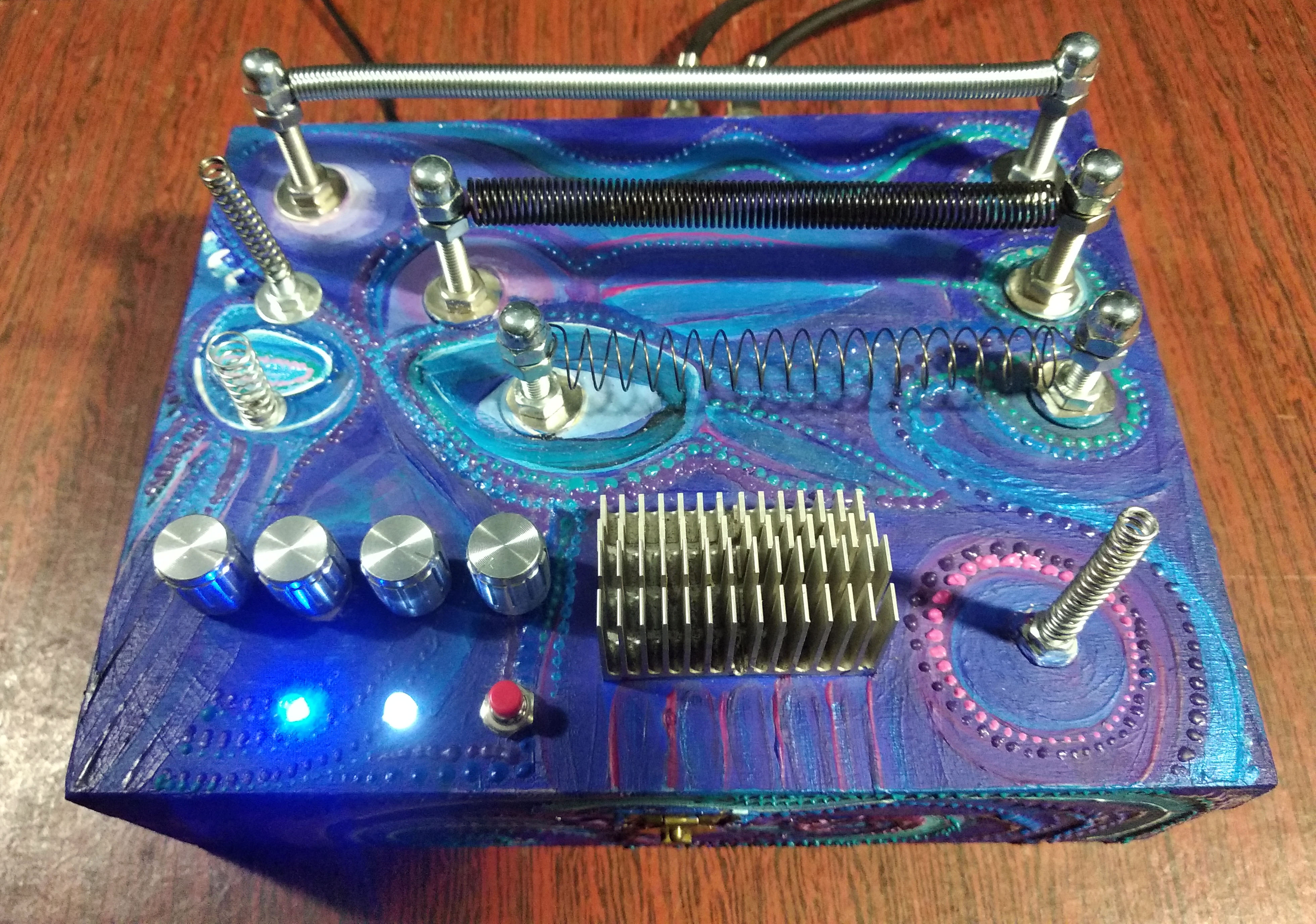
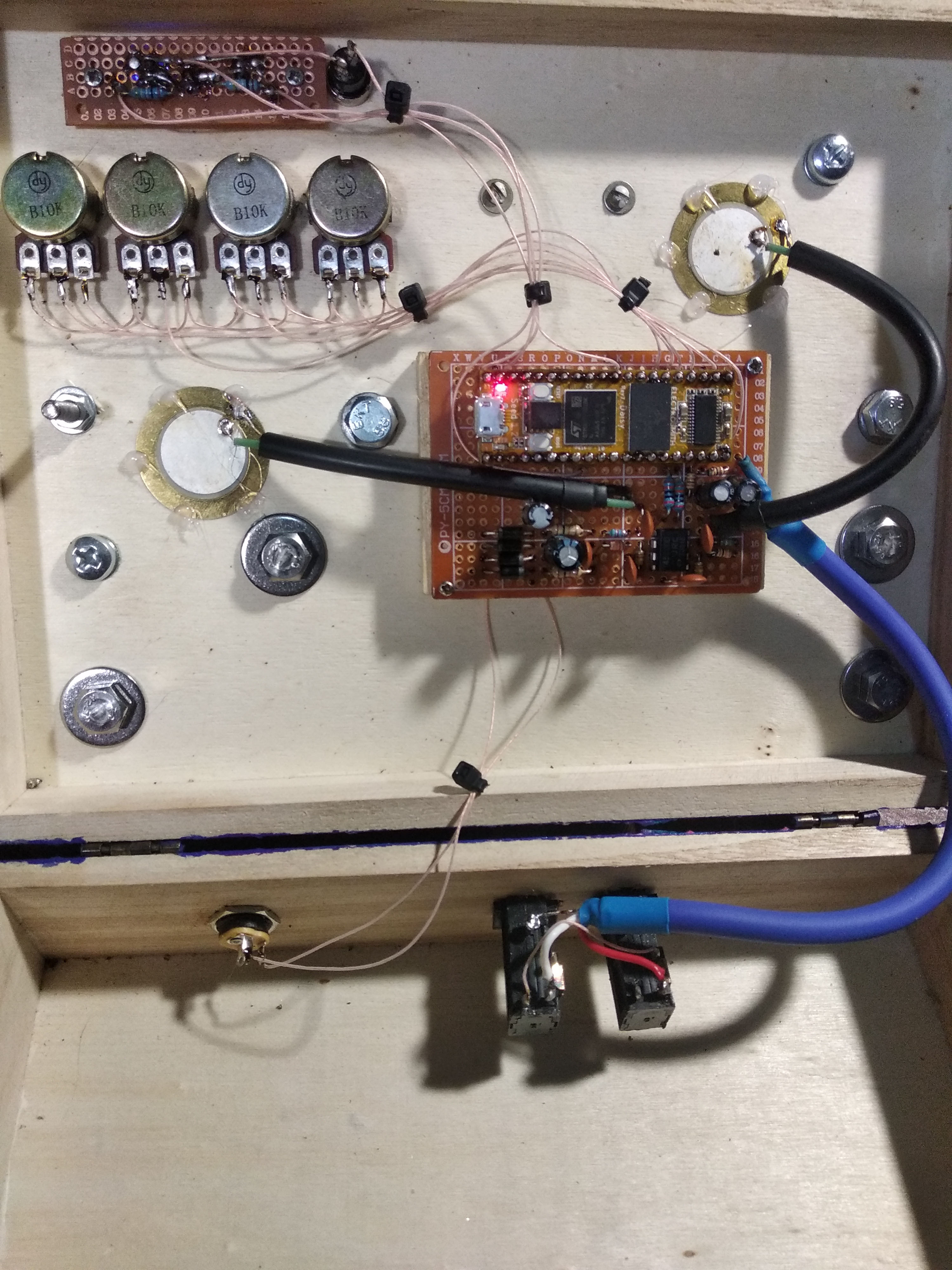
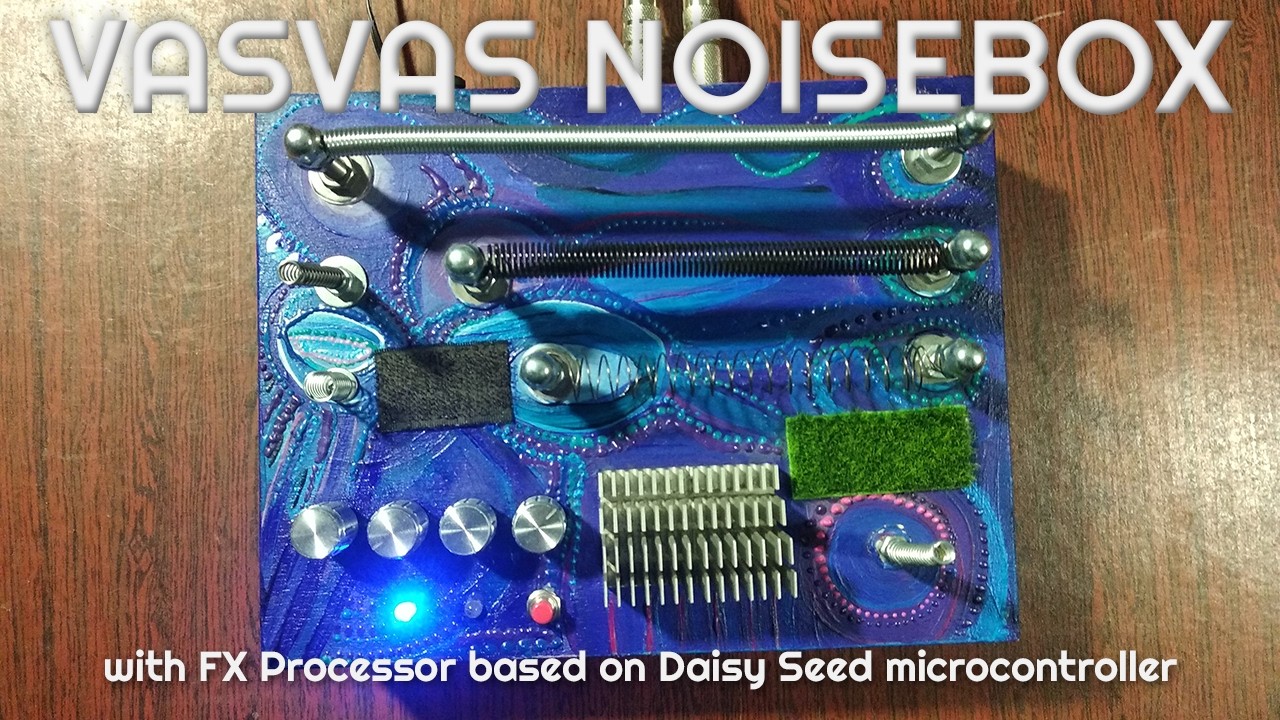
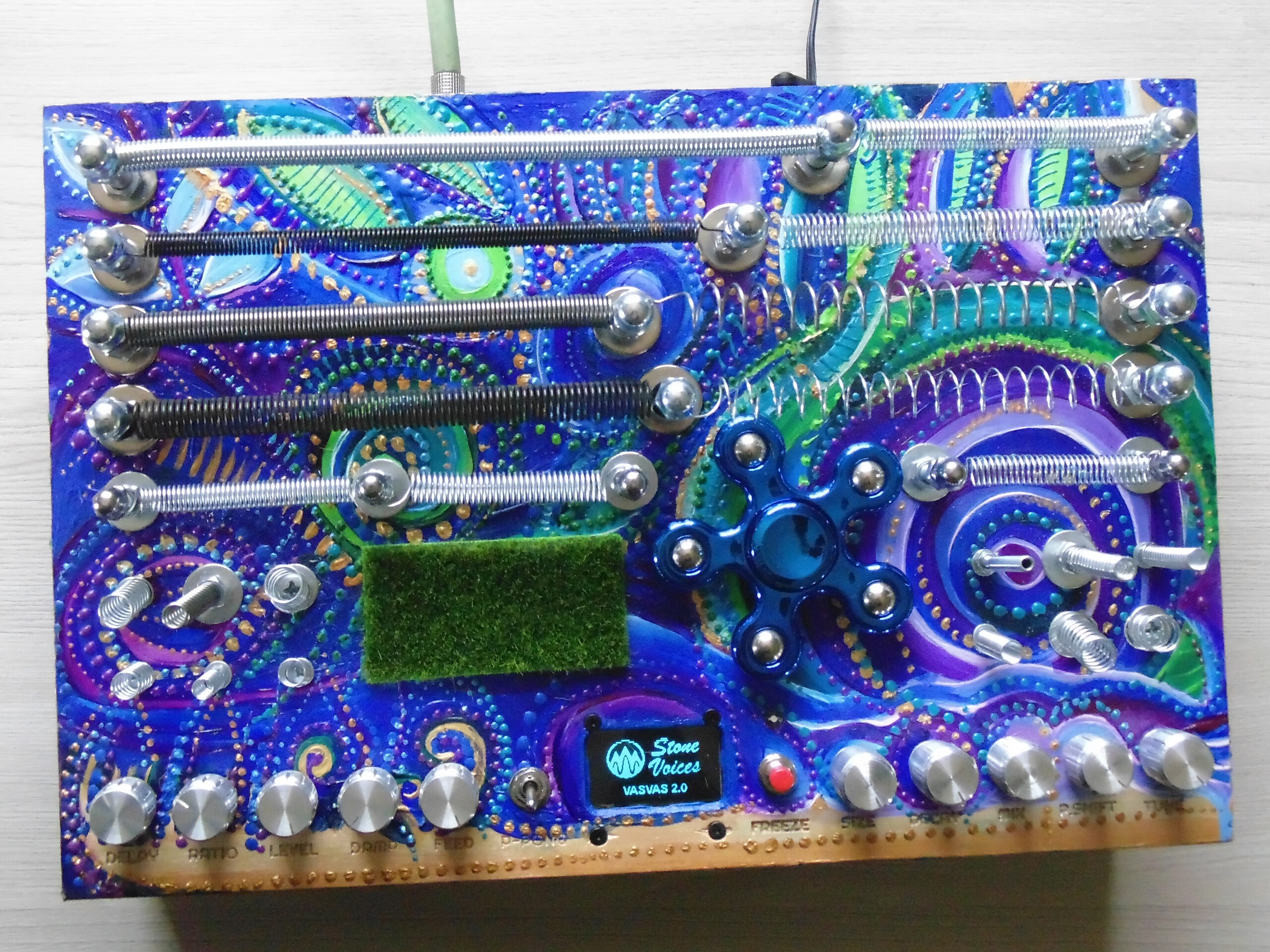
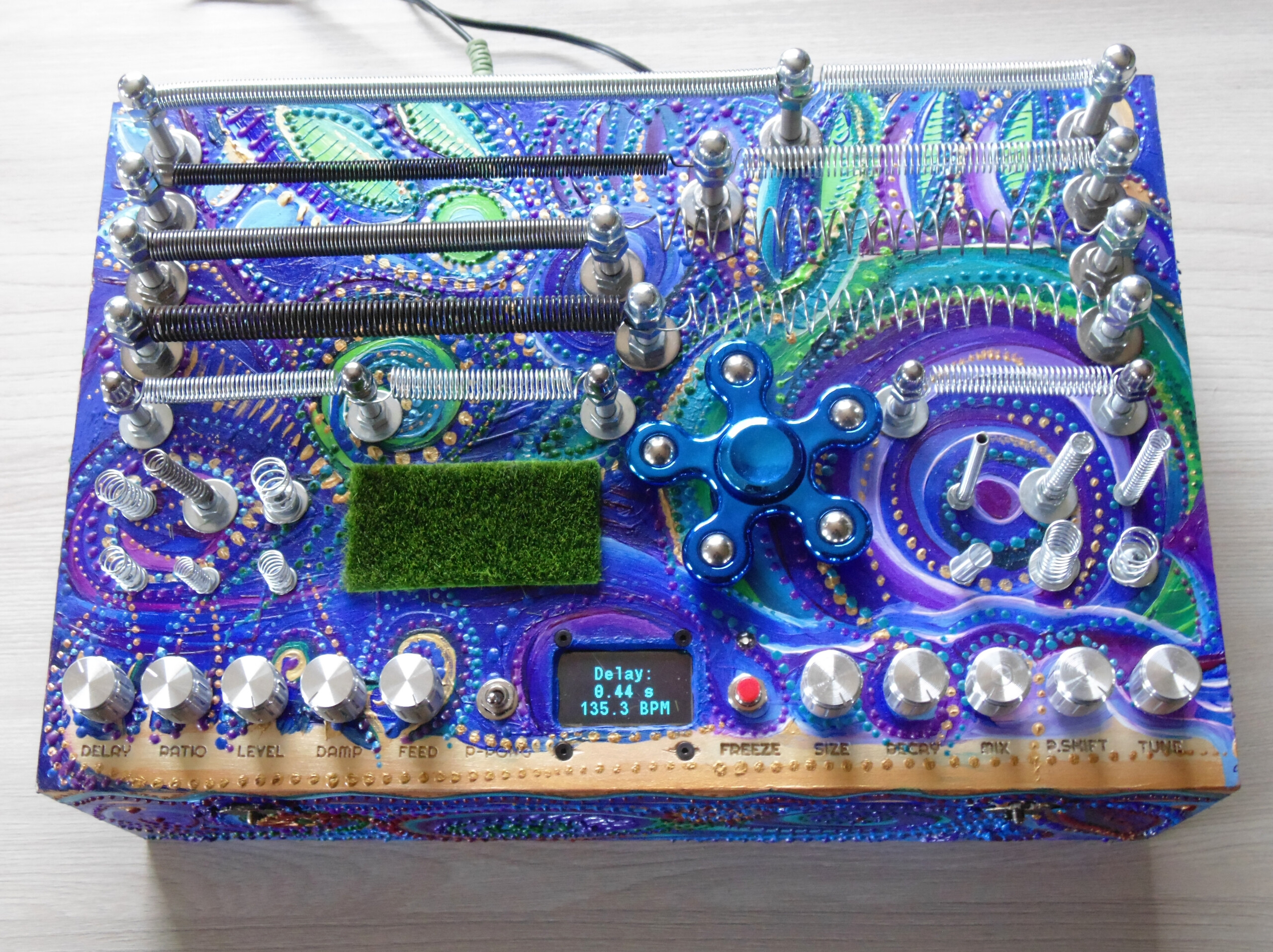
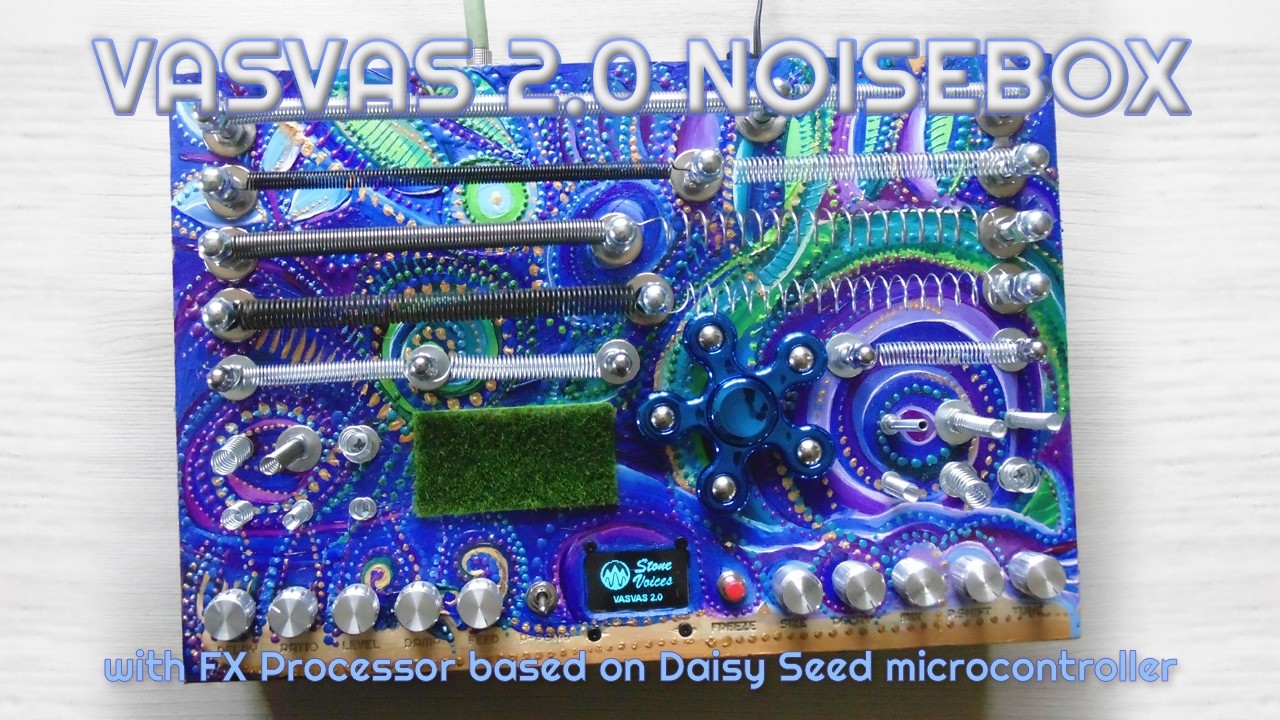
This noise box has two piezo pickups, the signal from which falls into the left and right channels, respectively, which allows you to get a real stereo signal at the output.
In the effects processor, I used the DReverb VST plugin I developed, which, with minor C++ code edits, is adapted to the microcontroller, as well as the Shimmer effect, which gives a more harmonic-rich sound. There is a Freeze mode that can “freeze” the sound for a long time.
The part of the plug-in that implements the DSP functions quite accurately. However, I have not yet figured out the correct allocation of memory in the SDRAM area. That’s why I’m still trying to port the more complex reverberation algorithm of the Ambient Reverb 7 plugin.
I have now finalized the code by adding a delay line size adjustment, similar to what I did in the Ambient Reverb 7 plugin. You can see how it works with the noise box here.
As soon as everything is done, I will post the code and the electrical circuit diagram on github.
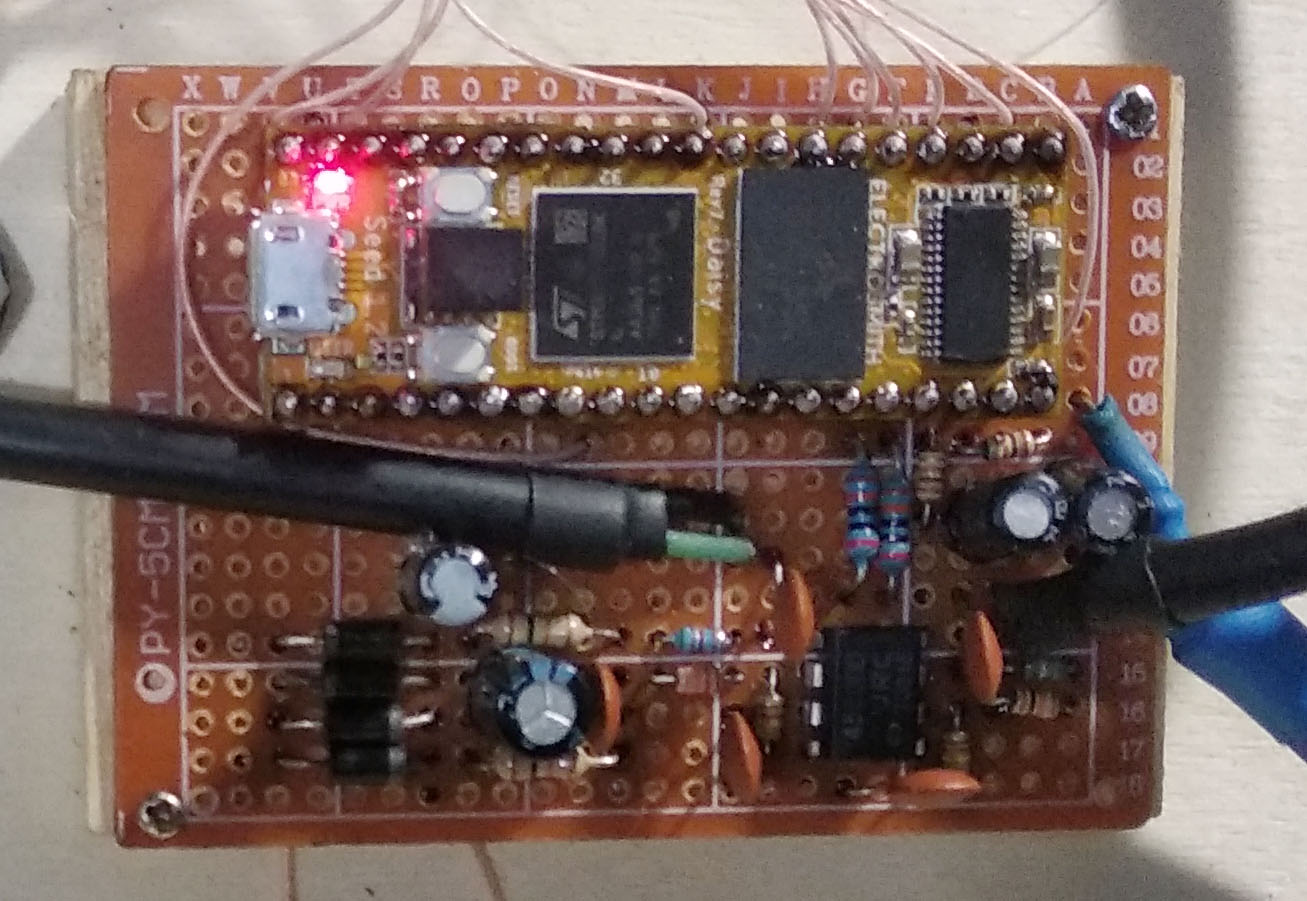
Fantastic work! Thank you for sharing this. This is what I am dreaming of building. I wonder if you could give a hint at how the signals from the pickups are processed/accepted into the Daisy Seed? I find it a little difficult finding information on the easiest way to connect a microphone (preferably a PDM) to the Seed or the Pod. Kind regards
The repository will be ready soon. The “finishing touches” remained.
There will be all the necessary information to build a noise box with an integrated effects processor.
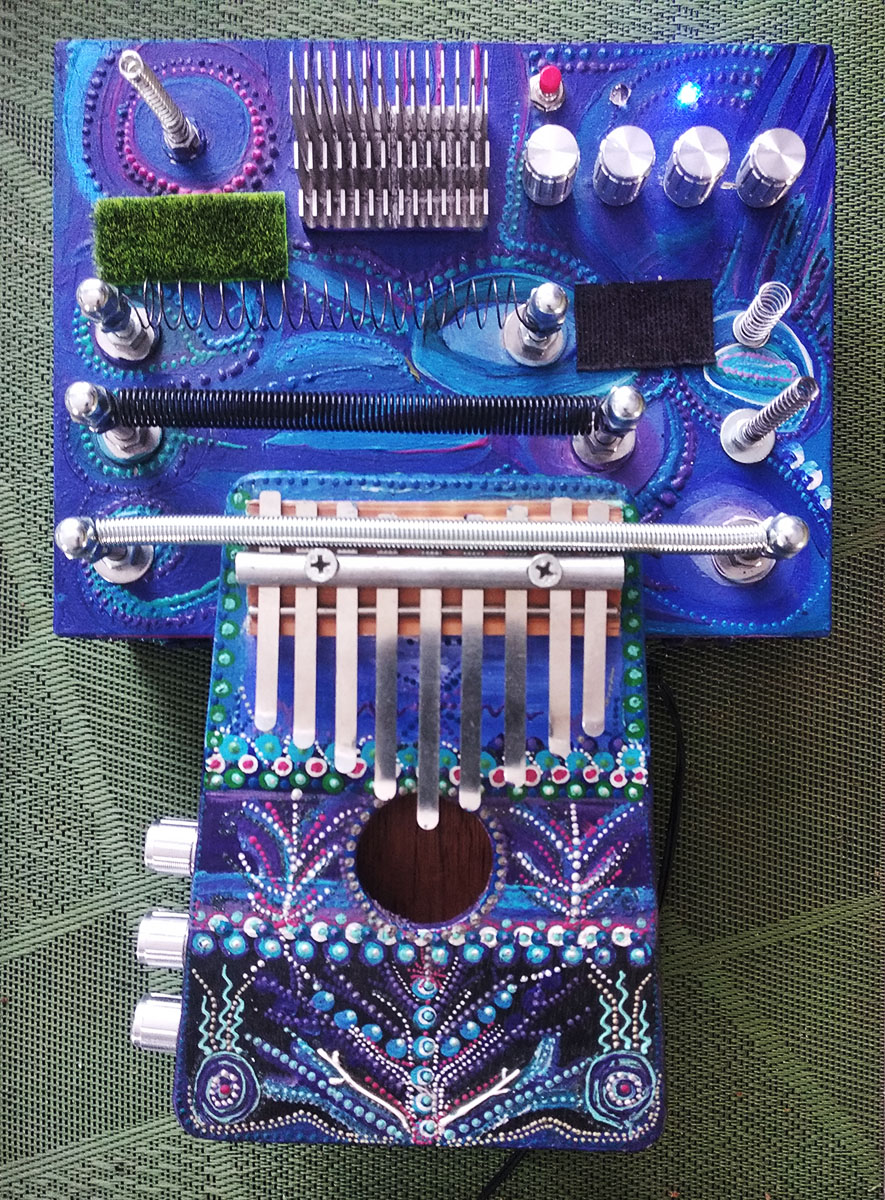
I tried to do an experiment - add a stereo delay to the circuit of the noisebox sound module with a delay time ratio of the left to right channel as 4:5. Well, I also leaned the kalimba against the body, so to speak, in a fit of fantasy
You can check out what came out of this by listening to the attached audio.
All sound parameters can be adjusted precisely, and their values are displayed when they are changed. Separate pickups are provided for the left and right channels, and their further effects processing is carried out separately.